

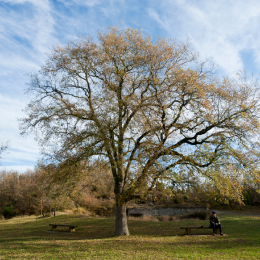
The Green Ring of Vitoria
Connect with nature in the Green Ring of Vitoria, a network of peri-urban parks that surround the city with over 640 hectares of natural spaces. The hotel is located just a 5-minute walk from Atxa-Zadorra Park, from where you can start a circular trail by foot or by bike of more than 30 km that goes through the 6 parks that make up the ring.
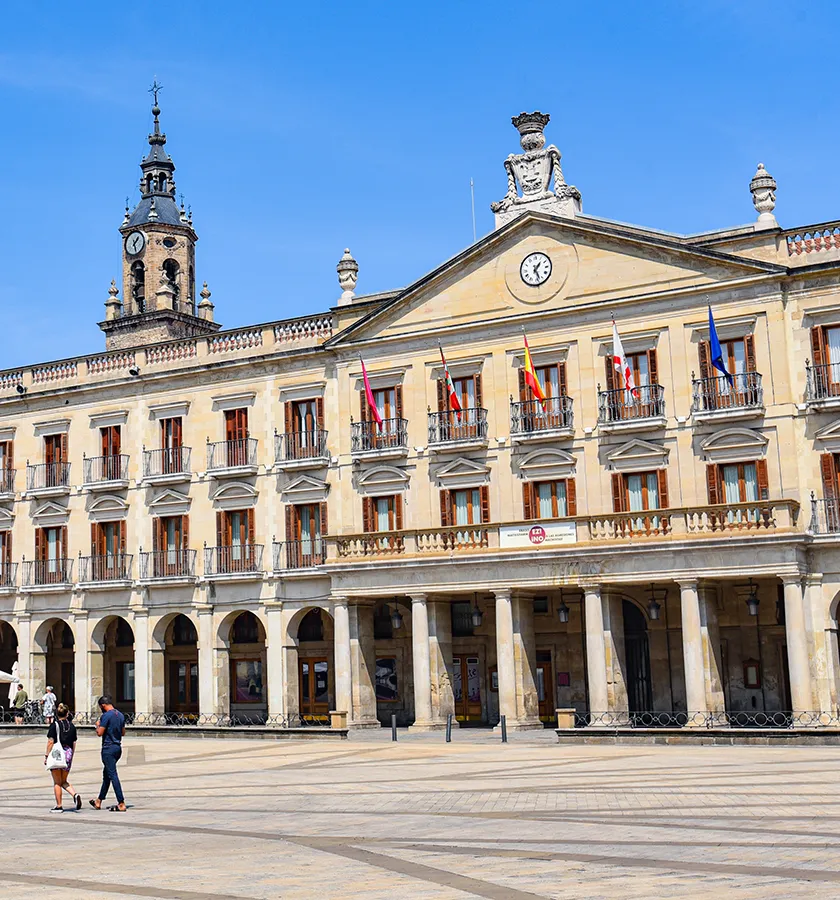
Plaza de España
The Plaza de España (or Plaza Nueva), built in the late 18th century in neoclassical style, is a quiet place with numerous bars and terraces to taste the local cuisine.
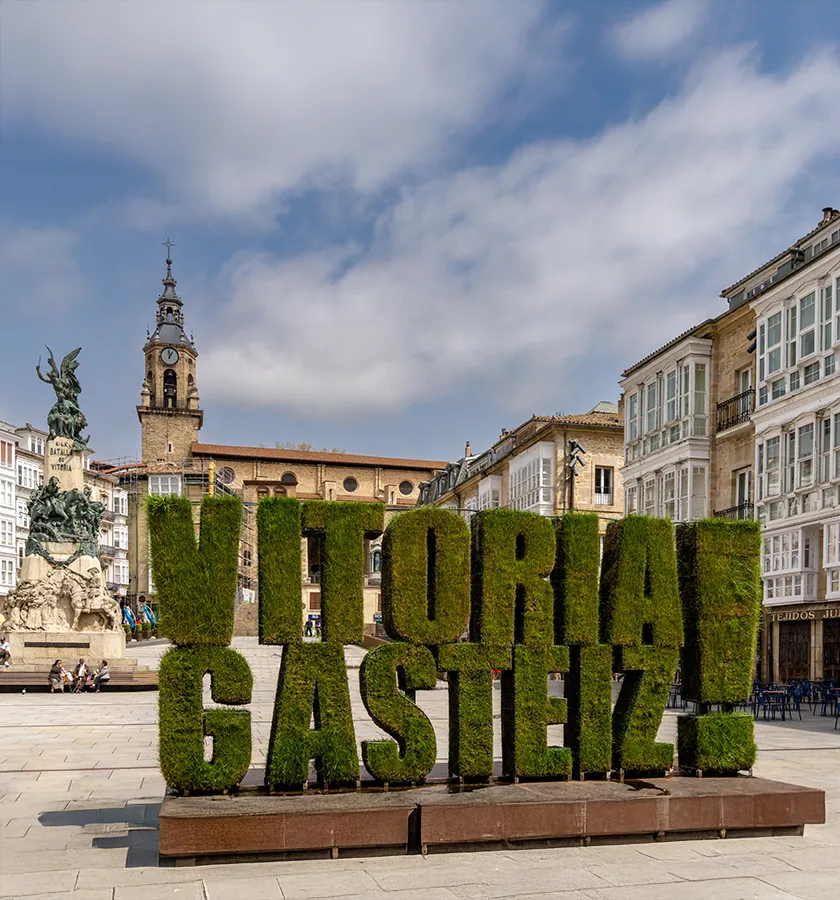
Plaza de la Virgen Blanca
The Plaza de la Virgen Blanca is the epicenter of Vitoria. Created in the 14th century as a transition between the medieval city and the new neighborhoods, it was a market and meeting point. In 1917, the monument to the Battle of Vitoria (1813) was inaugurated, and in 2008 the square was completely renovated, eliminating unevenness and redesigning the pavement and gardens. In 2012, the sculpture "Green" was installed celebrating Vitoria's award as the European sustainable capital. Today, it is a meeting point with bars and restaurants.
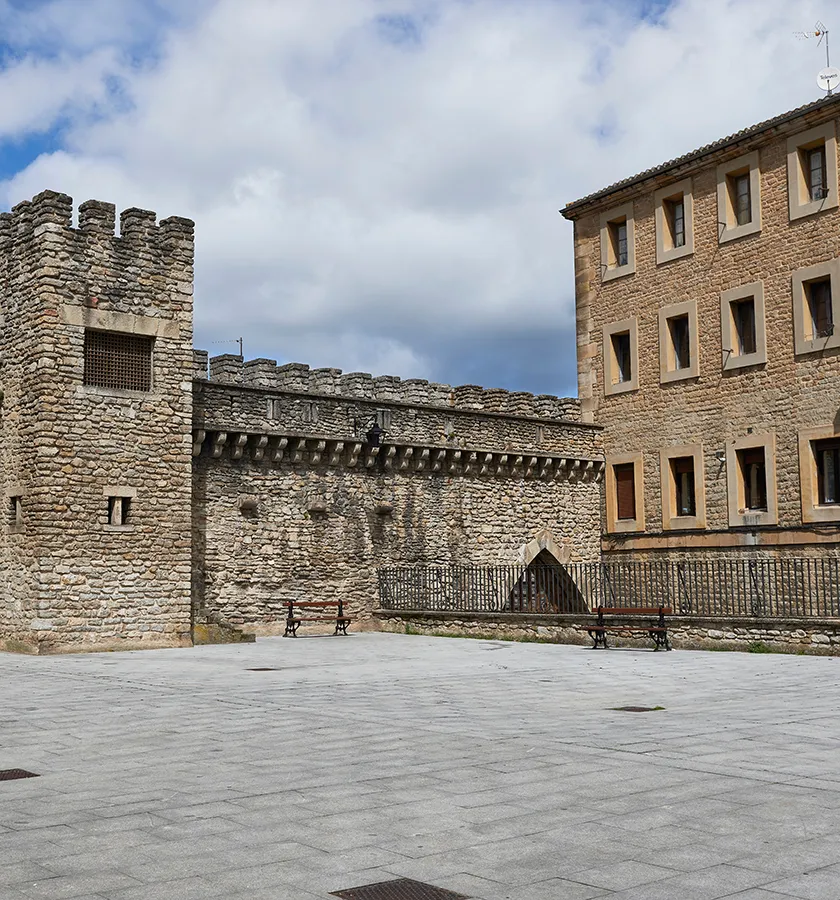
Defensive walls
Due to its strategic location, Vitoria-Gasteiz was coveted by the kingdoms of Castile and the Kingdom of Navarre. It had a double defensive wall that still retains some of its sections and towers.
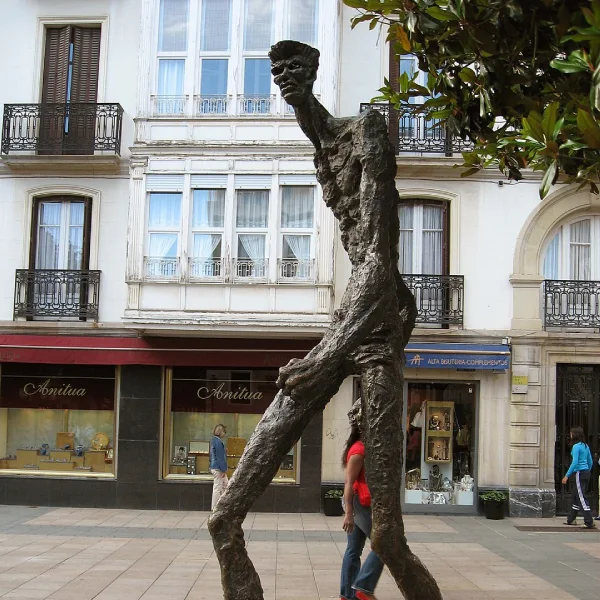
El Caminante
While walking through the center of Vitoria-Gasteiz, you can come across El Caminante, a three-meter bronze statue located at 17 Eduardo Dato Street. This figure symbolizes those who, falling in love with the city, decide to make it their home. It is said that El Caminante is a fan of fashion, shopping, and sports, so it is often seen wearing different outfits in the commercial street, reflecting sports events or fashion week. We invite you to meet this beloved citizen.
El Caminante in Vitoria-Gasteiz by [Author from Wikimedia Commons] (CC BY-SA 3.0)